
The Best Foundation for a Bunkie: 4 Options Compared
Your bunkie is only as good as what it sits on. A level, well-drained foundation keeps doors and windows operating smoothly, protects the bottom logs from moisture, and prevents the seasonal shifting that Canadian frost is famous for. The good news: a small structure doesn’t need a house-grade foundation. Here are the four options we recommend, from simplest to most permanent.
1. Compacted Gravel Pad — Best All-Round Value
A gravel pad is our default recommendation for most backyard builds. You excavate 4–6 inches of topsoil over an area slightly larger than the bunkie footprint, lay landscape fabric, fill with ¾-inch crushed gravel, and compact it level.
Why it works: gravel drains water away from the timber, spreads the load evenly, and tolerates minor frost movement without cracking. Cost: roughly $300–$800 DIY, more if you hire it out. Best for: flat or gently sloped sites with decent drainage.
Add concrete patio slabs or pressure-treated skids on top of the gravel to lift the floor frame off the stone and improve airflow underneath.
2. Deck Blocks — Fastest and Cheapest
Pre-cast concrete deck blocks sit on compacted ground (ideally on a few inches of gravel) and cradle pressure-treated beams that support the floor. No digging, no curing, no machinery.
Why it works: for a lightweight structure under 15 m², deck blocks are quick, cheap, and easy to re-level with shims if frost nudges a corner. Cost: typically $150–$400 in materials. Best for: budget builds, seasonal-use bunkies, and sites where you may want to relocate the structure later.
Watch out for: soft or poorly drained soil. Blocks can settle unevenly on clay — prepare a gravel base under each block.
3. Ground Screws / Helical Piles — Best for Slopes and Frost
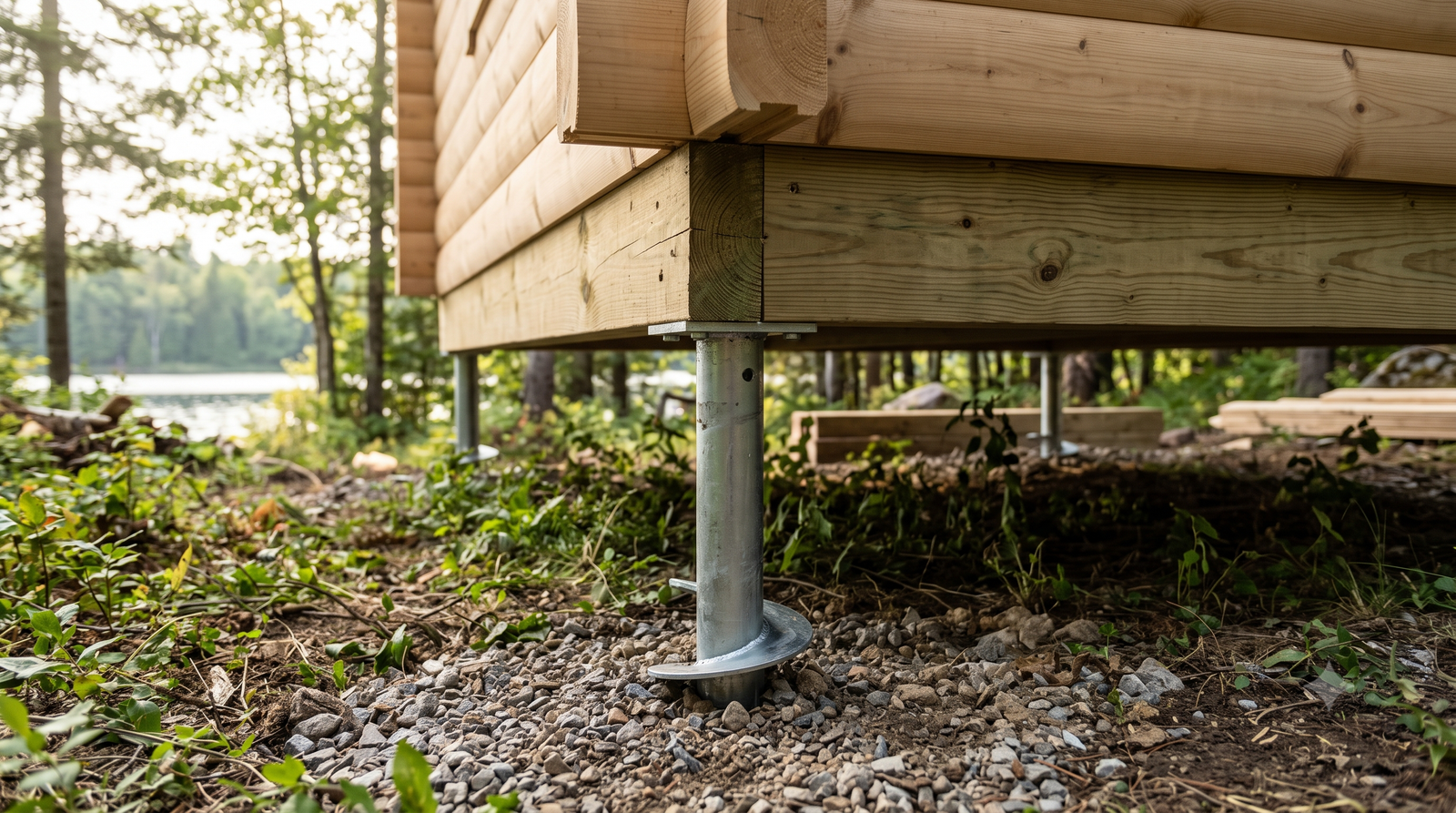
Steel ground screws (or contractor-installed helical piles) are driven below the frost line and topped with adjustable brackets, giving you a perfectly level frame even on sloped or uneven terrain.
Why it works: anchoring below frost depth virtually eliminates seasonal heaving — the closest thing to a permanent foundation without pouring concrete. Installation for a small bunkie usually takes half a day. Cost: roughly $1,000–$2,500 installed depending on soil and site access. Best for: cottage lots, slopes, wet sites, and four-season bunkies where you never want to re-level.
4. Concrete Slab — Maximum Permanence
A poured slab gives you a rock-solid, ready-made floor base. For a bunkie it’s usually overkill, but it makes sense if you’re placing the structure on an existing patio, want a heated floor, or plan a workshop with heavy equipment.
Cost: typically $2,000–$5,000+ contracted. Trade-offs: the most expensive option, permanent, and in some municipalities a slab can affect how the structure is classified — check locally (see our Ontario permit guide).
Quick Comparison
| Option | Cost (CAD) | DIY-friendly | Frost resistance | Best for |
|---|---|---|---|---|
| Gravel pad | $300–$800 | Yes | Good | Most backyards |
| Deck blocks | $150–$400 | Very | Fair | Budget / seasonal |
| Ground screws | $1,000–$2,500 | Moderate | Excellent | Slopes, cottages, 4-season |
| Concrete slab | $2,000–$5,000+ | No | Excellent | Permanent workshops |
Three Rules That Apply to Every Foundation
Level within a few millimetres. Interlocking log walls rely on a flat base; check level in both directions before the first log goes down.
Keep wood off the ground. The bottom of the floor frame should sit above grade with airflow underneath — moisture is the only real enemy of a timber bunkie.
Slope the surrounding grade away. Water should drain away from the foundation on all sides.
Once your base is ready, most Nordic Bunkies kits go up in a single weekend. If you’re planning year-round use, insulate the floor during the build — it’s far easier than retrofitting. See how to insulate a bunkie, then browse models in the store.
FAQ
Do I need to dig below the frost line for a bunkie? Not necessarily. Lightweight structures on gravel or deck blocks tolerate minor frost movement; ground screws are the answer if you want zero movement.
Can I put a bunkie directly on the grass? No. Direct ground contact traps moisture against the timber and leads to rot. Always use gravel, blocks, screws, or a slab.
What foundation is best for a sloped lot? Ground screws or helical piles — the adjustable brackets create a level frame without major excavation.
How level does the base need to be? As level as you can practically achieve. More than a few millimetres of variance will telegraph into the walls and make windows and doors bind.

