
How to Heat a Bunkie in Winter: 5 Options for Canada
A well-built bunkie under 15 m² is one of the easiest spaces in the world to heat — there’s simply not much air to warm. Pair a modest heat source with floor and roof insulation and you have a genuine four-season retreat. Here are the five options we see customers use, with honest pros and cons.
1. Electric Panel or Baseboard Heater — Simplest
If your bunkie has power, a 1,500–2,000 W wall-mounted panel or baseboard heater will comfortably heat an insulated space under 15 m² in most of southern Canada.
Pros: cheap to buy ($100–$400), silent, zero maintenance, precise thermostat control, safe for unattended operation on a dedicated circuit. Cons: requires an electrical connection and is the costliest option per unit of heat in provinces with expensive electricity.
This is our default recommendation for guest bunkies and home offices. Wiring first? Read how to add electricity to a bunkie.
2. Ductless Mini-Split Heat Pump — Most Efficient
A small mini-split delivers 2–3 times more heat per dollar of electricity than resistance heaters, and cools the bunkie in summer as a bonus. Cold-climate models work efficiently well below −20 °C.
Pros: lowest running cost, heating and air conditioning in one, quiet. Cons: highest upfront cost ($2,500–$4,500 installed) and requires an HVAC technician. Worth it for daily-use spaces like offices and studios.
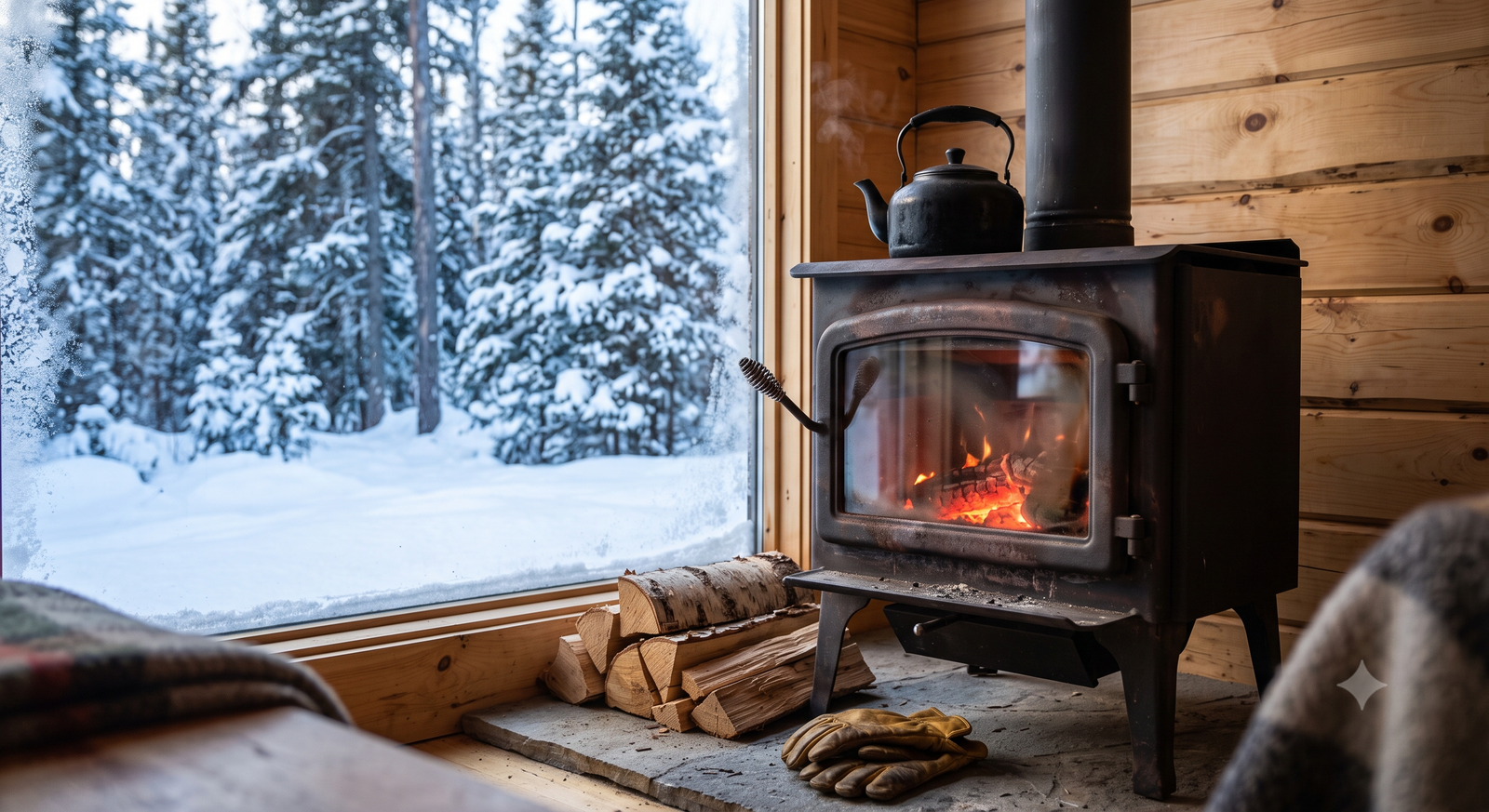
3. Small Wood Stove — Most Atmospheric
Nothing matches a crackling stove in a timber cabin. Compact “cabin-sized” stoves are built exactly for spaces like this.
Pros: off-grid, powerful, and the ambience is the whole point for many owners. Cons: installation must follow the manufacturer’s clearances and WETT-certified inspection is strongly recommended in Canada (your insurer will likely require it). You’ll also need a proper chimney, floor protection, and a CO/smoke alarm. Budget $1,500–$4,000 all-in, and check that a solid-fuel appliance is acceptable under your municipal rules and insurance policy.
4. Direct-Vent Propane Heater — Best Off-Grid Workhorse
A wall-mounted direct-vent propane heater draws combustion air from outside and exhausts outside — no electricity needed, no indoor air quality compromise.
Pros: thermostatic, strong output, runs unattended, ideal for off-grid cottage lots. Cons: needs a propane tank and professional gas fitting; unit plus install typically runs $1,500–$3,000. Never use portable, unvented propane heaters as a primary heat source in a sleeping space.
5. Off-Grid Extras: Solar + Diesel Heaters
For remote sites, some owners combine a small solar/battery setup with a diesel air heater (the type used in campervans) mounted outside with ducted warm air in. It’s economical and effective, but a specialist installation — treat it as an enthusiast option.
Sizing: How Much Heat Do You Need?
For an insulated bunkie in southern Ontario, roughly 100–150 W per square metre is a comfortable rule of thumb — so a 10 m² bunkie needs about 1,000–1,500 W, and a 15 m² model about 1,500–2,200 W. Uninsulated spaces can need double that, which is why insulation is always the better first dollar spent.
Safety Non-Negotiables
Whatever you choose: install a smoke alarm and a carbon monoxide alarm, respect appliance clearances, and have fuel-burning appliances installed by certified professionals. Small spaces are unforgiving of shortcuts.
The Bottom Line
Grid power available → electric panel heater (or a mini-split for daily use). Off-grid → direct-vent propane or a WETT-inspected wood stove. Combine either with insulation and your bunkie is a twelve-month space.
Explore four-season-ready models in the Nordic Bunkies store, or contact us for advice on your setup.
FAQ
What size heater do I need for a 10 m² bunkie? Insulated: about 1,000–1,500 W. A single 1,500 W electric heater is usually plenty in southern Canada.
Can I leave a heater running in my bunkie unattended? Fixed electric panel heaters and direct-vent propane units with thermostats are designed for it. Never leave portable or unvented heaters running unattended.
Can you put a wood stove in a bunkie? Yes — with proper clearances, a certified chimney installation, and ideally a WETT inspection. Confirm with your insurer first.
What’s the cheapest way to heat a bunkie? Cheapest to install: a plug-in electric heater. Cheapest to run: a mini-split heat pump or firewood you harvest yourself.

